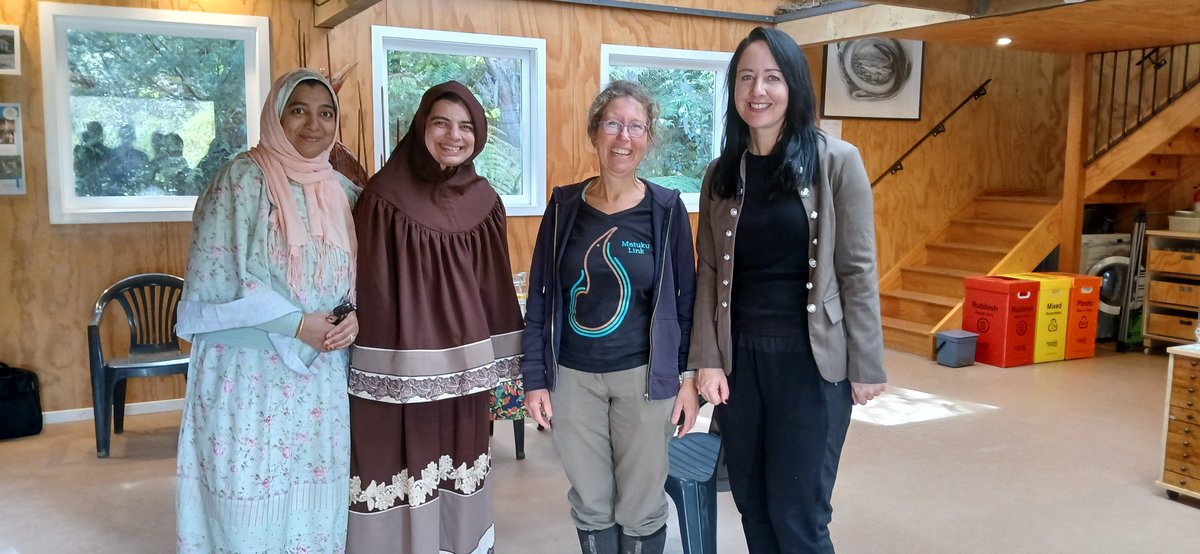
Aamena Telwala is a member of the Dawoodi Bohra community and a Point-of-Care scientist working at the Waitematā District Health Board in Auckland, New Zealand. In this interview, Aamena reflects on her professional journey and shares how she balances work, community service, and entrepreneurial ventures.
- You are a Point-of-Care specialist. What is that, and why is it important?
Point-of-Care testing refers to diagnostic tests conducted at the patient’s bedside, providing rapid results that facilitate immediate clinical decision-making. These real-time tests assist in diagnosis, guide treatment plans, and monitor patients to ensure favorable outcomes. Unlike traditional laboratory testing, they involve less invasive technology, therapeutic interventions, and fewer pre-analytical errors.
Recently, I was also appointed as an Internal Auditor, responsible for evaluating the efficiency of the laboratory and its various departments. This role involves monitoring quality protocols, staff training, and managing equipment inventory.
Point-of-Care testing has become increasingly crucial, alleviating stress on the public health system and proving to be lifesaving in many situations.
- Why did you pursue a career in healthcare?
I have always looked up to my father with admiration and respect, and aspired to be like him.
He is an MBA-holding analytical chemist, serving as the Asia Division Head for Procter & Gamble while also working as a business consultant specializing in quality control. Watching him prepare for talks and seminars, create presentations, and carry himself with self-discipline and willpower inspired me to pursue science. His dedication and approachable demeanor shaped my own professional approach.
One of my most cherished moments was when my father visited me at my workplace. Hearing the nurses acknowledge my contributions and seeing the pride in his eyes remains an unforgettable memory.
- Does your work routine feel repetitive, or does it offer enough variety to keep things engaging?
Every day is different—no two shifts are the same. In the morning, I might be analyzing heart attack markers, while in the afternoon, I could be ensuring the proper storage of medications. The role requires adaptability, as patient conditions change based on Point-of-Care results.
My responsibilities span various hospital departments, from the emergency room and ICU to surgical units, where I conduct critical tests like thromboelastography. I also oversee a network of 300+ pharmacy-grade fridges, ensuring medications are stored at optimal temperatures to maintain their efficacy and safeguard patient safety.
Additionally, I train clinical and nursing staff on Point-of-Care testing devices and regularly review their competencies, as even a minor mistake can have significant consequences. And when I’m not working in the hospital, I might be on a beautiful road trip to rural clinics, ensuring that smaller GP practices are properly equipped.
A recent highlight was managing the installation of alarms in North Shore Hospital’s newly inaugurated surgical wing, Tōtara Haumaru. The responsibility was immense—any errors could have serious consequences. When the hospital staff and patients moved in, and the system functioned flawlessly, I felt an overwhelming sense of relief and accomplishment.
- Can you recall a time when Point-of-Care testing made a life-saving difference?
I remember a premature baby in the Special Care Baby Unit who was in distress. Traditional venipuncture testing was not an option due to the baby’s low blood volume. Time was critical, so we performed Point-of-Care glucose testing, which quickly identified the issue. The baby received immediate treatment and survived—one of the most rewarding moments of my career.
- Have you faced unexpected challenges in your work?
This profession requires teamwork, but I recall a day when I was alone in the office while my team was deployed elsewhere. Managing everything independently felt overwhelming—what if something went wrong? There was no room for error.
I made a priority list and systematically tackled each task, reaching out to scientists and lab managers for guidance when needed.
Being able to rise to this unexpected challenge not only boosted my morale, but also heightened the confidence my seniors had in me, enabling them to promote me to the post of trainer superuser.
- How do you stay focused and driven?
My inner strength comes from my spirituality and the teachings of my community leader, His Holiness Syedna Mufaddal Saifuddin, which shape my personal and professional values.
He has time and again counseled us to do good even to those who have wronged you. This lesson has resonated a lot and made me more empathetic. Whether at work or home, I try to be more understanding which has helped me be a better version of myself.
I also love hands-on do-it-yourself (DIY) projects, from repurposing old tires into planters, constructing bird feeders and designing home decor. I have even stitched and designed my own curtains, pillowcases, and bedsheets. These creative endeavors encourage me to step out of my comfort zone, and reinforce my sense of ownership over my work. They help me stay refreshed and invigorated.
I am also deeply grateful to my parents for instilling strong values, a commitment to community service, and the importance of humility and perseverance.
- Apart from your profession and community involvement, what else keeps you busy?
I strongly believe in self-care and have always been fascinated by the power of scent. As a microbiologist, I recognized the limitations of traditional fragrance oils, which can oxidize over time and cause stickiness or staining. This led me to research and develop water-based perfumes.
In 2024, I launched my own perfume line in both New Zealand and my hometown of Mumbai. Nurturing this business from the ground up has been an incredibly fulfilling journey. It has allowed me to discover my passion for entrepreneurship—an instinct I inherited from my mother, a successful businesswoman herself.